
Calling All Outstanding Tennessee Teachers!
Please apply or nominate an outstanding educator who incorporates civic knowledge and engagement in their teaching. This year, invited teachers may attend one version of the 2026 conference which are scheduled for:
- Nashville: May 27–29
- Knoxville: June 10–12
- Memphis: June 24–26.
Housed within the University of Tennessee, Knoxville’s Howard H. Baker Jr. School of Public Policy and Public Affairs, the Institute of American Civics (IAC) is committed to improving civic knowledge and civil discourse through courses, student programs, public events, and K-12 outreach.
Invited educators may attend the residential conference at no cost.
To enable the participation of educators throughout Tennessee, invited teachers traveling to the TN Civics Academy, may receive travel stipends.
| Distance From Home Address to Conference | Travel Stipend Amount (Distributed after attending the full 2.5-day conference) |
| 100 miles or less | $100 |
| 101-200 miles | $200 |
| 201-300 miles | $300 |
| 301+ miles | $400 |
Note: Travel stipends are limited, so early registration is recommended.
About the Academy
Housed within the University of Tennessee, Knoxville’s Baker School of Public Policy and Public Affairs, the Institute of American Civics (IAC) is committed to improving civic knowledge and civil discourse through courses, student programs, public events, and K-12 outreach.
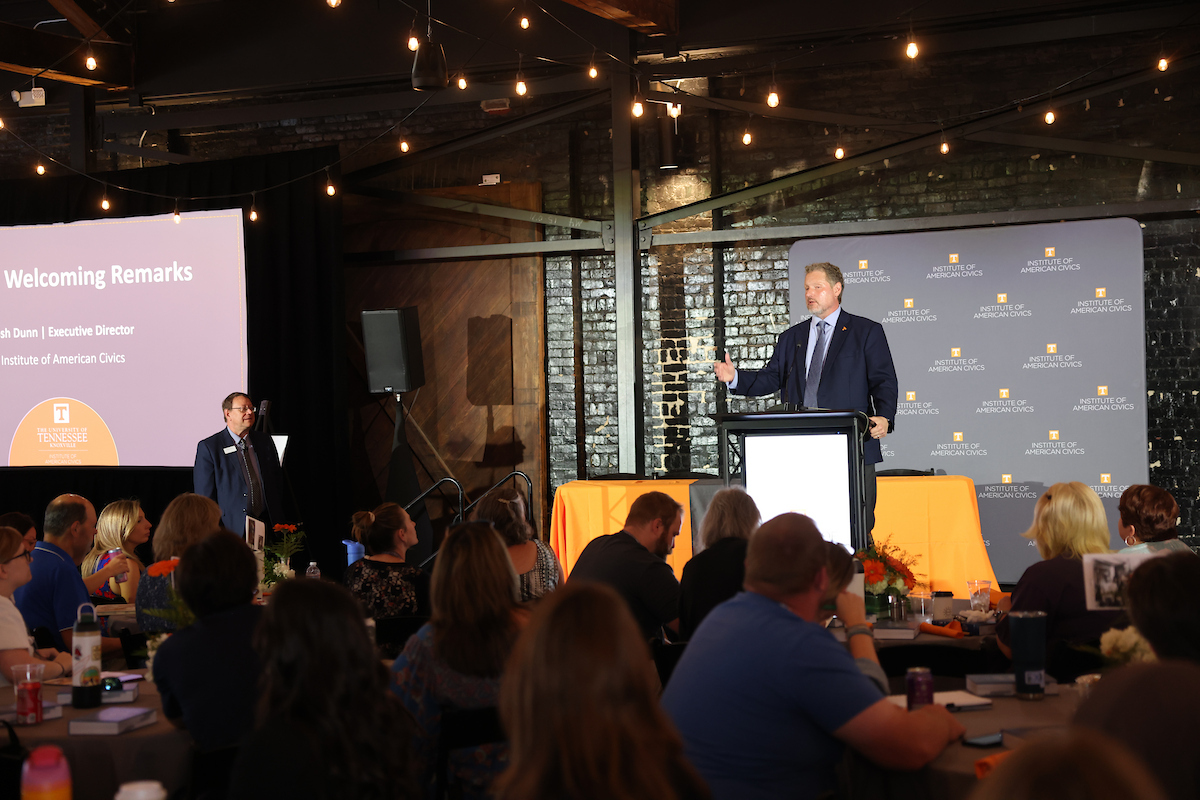
The IAC TN Civics Academy provides a space for educators to discuss ways to foster and teach topics in civic education and to nurture civic engagement and viewpoint diversity among Tennessee’s youth. The multiple-day conference provides discussion panels led by experienced teachers from rural, urban, and suburban districts to discuss student engagement strategies, classroom challenges, and opportunities faced in promoting healthy discussion, viewpoint diversity, and civil discourse, and to share cross-disciplinary project-based learning activities. Also, attendees learn from UT scholars through content-rich presentations highlighting American founding principles, history, U.S. Constitutional rights, economics, Supreme Court decisions tied to American education, and the legacy of Senator Howard H. Baker Jr.
Why Teach Civics?
- Inspire youth to study constitutional government.
- Model civil discourse.
- Help students grow as engaged citizens.
- Foster viewpoint diversity.
- Motivate youth to vote and pursue public service.
Objectives
- Be a resource for teachers and students.
- Expand civic knowledge and participation.
- Provide 16 hrs. of content-rich Professional Development (PD).
- Share educational resources.
- Engage with teachers.
- Provide scholarly presentations and active learning workshops on civic education.
- Incorporate viewpoints from public, independent, rural, urban, and suburban educators.
TN Civics Academy Shared Resources
- Using a “Gateway Game” to Stimulate Student Interest and Build Foundational Knowledge by Alex Cohen, Jon Alden, and Jonathan Ring
- 2023 TN Secretary of State Civics
- Tennessee Blue Book
- National Archives: Educator Resources
- Studying the Past to Inform the Present and Shape the Future, National History Day
- The Business Case for Civics Education, Harvard Business Review White Paper
- A New Model for Civic Education in America’s Public Universities: The Institute of American Civics at the University of Tennessee by Marianne Wanamaker, William Lyons, John Scheb, and Hancen Sale
The contents of this Institute of American “Renewing the Republic” Program (program) were developed under a grant from the U.S. Department of Education (Department). The Department does not mandate or prescribe practices, models, or other activities described or discussed in this document. The contents of this program may contain examples of, adaptations of, and links to resources created and maintained by another public or private organization. The Department does not control or guarantee the accuracy, relevance, timeliness, or completeness of this outside information. The content of this program does not necessarily represent the policy of the Department. This publication is not intended to represent the views or policy of, or be an endorsement of any views expressed or materials provided by, any Federal agency.